what did yamaha do to 1991 yz 125
 The Yamaha YZ125 two-stroke might be the number one motocross cycle in the world. Actual production numbers are difficult to approximate, but the YZ125 and 250 have had the longest product runs of any dedicated dirt bikes, starting in 1974 and continuing to this mean solar day. And in that time both sold well, making them the prime contenders for the title of earth's biggest selling MX bikes.
Even more amazing is the YZ125'south current run every bit king of the 125s, which has continued for about 15 years. To this day, the YZ continues to become the nod as the all-time bike in its class. With a light make-over in 2015, the fiddling YZ sits in Yamaha's line as the perfect bridge to the big leagues, too equally being an excellent final destination in anyone's moto career. Few bikes have made such a smashing impact on the careers of so many riders likewise as on motocross itself.

THE HISTORY BOOK
Despite being the sole survivor of the once flourishing Japanese 125 course, the YZ has never been dominant on the pro level. In its earliest years, Yamaha's effort was concentrated on the bigger bikes. While Gary Jones, Pierre Karsmakers, Jimmy Weinert and Marty Tripes rode works versions of the YZ250 and YZ360, the 125 was seen every bit more of an amateur bike. That changed in 1974 when the AMA gave the 125 class its own official championship. The only problem was a loftier school kid named Marty Smith who absolutely dominated the new class on a Honda for the first two years. In that period the highlight for Yamaha was Tim Hart, who gave the works version of the YZ125 its first national win in the last race of 1974, then followed it up by winning the soggy flavour opener in 1975. That was the only race in 1975 that Marty Smith didn't win.
Everything changed in 1976 with the coming of Bob Hannah. He was hired, forth with Danny Turner, to take on Smith, and what resulted was one of the almost epic battles in the history of American MX. Hannah was supplied with the OW27, a water-cooled works Yamaha 125, and he used it to dominate the first races of the year. Smith came back with his own exotic works Honda, but never recaptured his class from '75. For a detailed account of that year's boxing, go to www.mxworksbike.com.
When it was all over, Yamaha earned its first 125 National Title. Fifty-fifty better, the production bike was beginning to see some influence from Yamaha'southward racing success and was improving rapidly. The years between 1976 and 1979 saw Yamaha'south greatest success in the 125 Pro class. Next it was Broc Glover's turn to fly the 125 flag. He won three straight 125 National Championships for Yamaha before moving up to the bigger bikes.
Then came a long menses when Yamaha was pushed to the groundwork in the 125 form. From 1981 until 1992, the YZ125 and its works cousins had little touch on in pro racing. In that menses Ron Lechien, Keith Bowen, Damon Bradshaw and Doug Henry gave Yamaha a scattering of wins but no championships. Jeff Emig put an cease to the drought by winning vi of the 11 races in 1992 to take the title.
In the years that followed, Kevin Windham, John Dowd, Stephane Roncada, Larry Ward, Chad Reed, Craig Anderson and Mike Brown all gave the production-based YZ125 national wins, merely no more National Championships would come. In regional Supercross, the YZ125'southward most notable highlight came in 1989 when information technology gave Damon Bradshaw his merely championship. Oddly enough, its pro record never did the YZ justice. From the start, information technology was more than of a people's wheel and remains the 125 most likely to win at the local level to this day.
THE YEARS
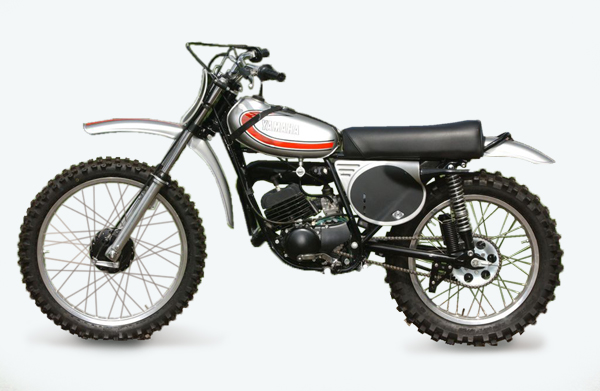
1969: Yamaha released the 125cc AT-i shortly after the 250cc DT1. It carried a toll tag effectually $500 and actually had an electric starter. Yamaha aimed this automobile at women and young riders who might take trouble with a kickstarter. In sales, the 125 was overshadowed by the DT-1 and the wildly successful CT-i, which was virtually the same bike, just with a 175cc motor and no electric starter. At the time, Yamaha offered a YGT (Yamaha 18-carat Tuning) kit, which had a ported cylinder, a loftier-compression caput, a carb, a pipe and a new ignition that allowed you to get rid of the battery and starter. At the distributor level, Yamaha assembled a few of these under the AT-i MX name. This eventually morphed into the Yamaha 125MX.
1973: Although very few were actually made, Yamaha did produce a YZ125 in 1973. It was non offered to the general public, but a dealer in good standing could submit a rider resume to the importer and promise to obtain a semi-works bicycle. Nevertheless rare, this goes down in the books as the kickoff bike with the YZ125 name.
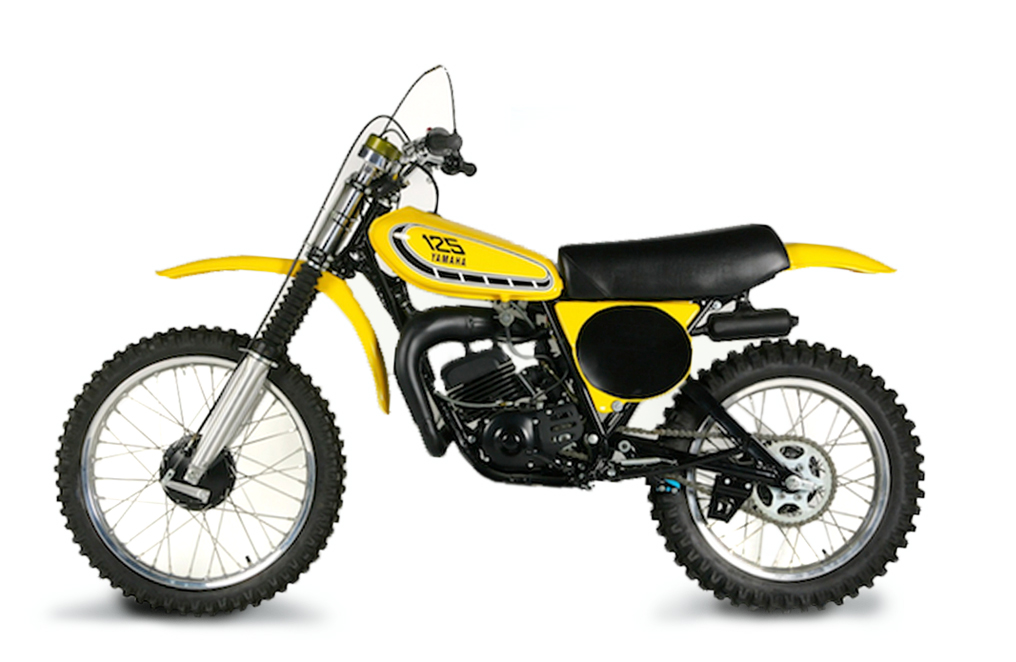
1974: This was the commencement real year of the Yamaha YZ125, which was brought out as a companion to the much more than exotic YZ250 and YZ360. The 125 still wasn't on the same level every bit the bigger bikes and didn't have nearly as many exotic parts. Information technology was, in fact, very similar to the MX125 and MX100, which Yamaha offered meantime. The YZ125 sold for $110 more than than the MX and had more than peak horsepower and a number of lighter parts. Plus, it had the cool strap on the tank. At the time, Honda owned the 125 class with the CR125M Elsinore, but the two Yamaha 125s were at least in the game.
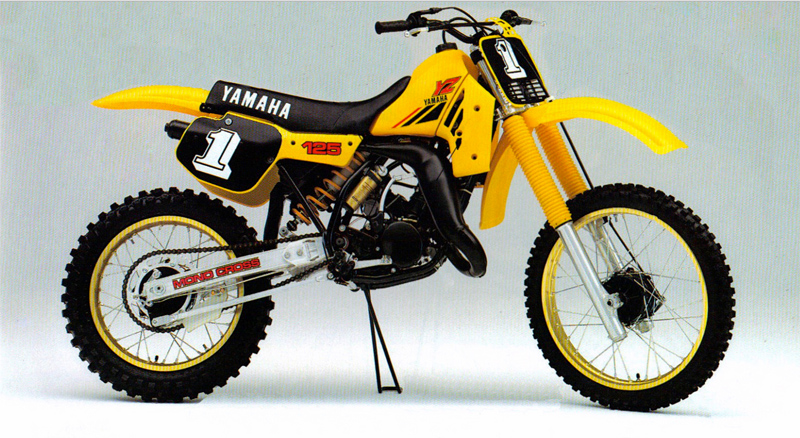

1975: By 1975, the 100 class was dying off, and Yamaha started taking the 125 more seriously. The big news was the Monoshock rear pause, but the YZ also got a new motor that was much more compact than the old AT1-based engine. The dished rear sprocket sold for near $50 alone. The YZ was still express in production at the time, and the less expensive MX version was more than common. Yamaha would finally surpass the unchanged Honda CR125M, but would have a new rival in the form of the first Suzuki RM125.
1976: Yamaha merged the MX line into the YZ line, so the 1976 YZ125 would have the highest production numbers of any YZ so far. The near interesting features of the '76 model were the big air canisters on top of each fork leg. The 125 class was now the property of Yamaha and Suzuki—the latter of which had only released the stunning, all-new RM125A.

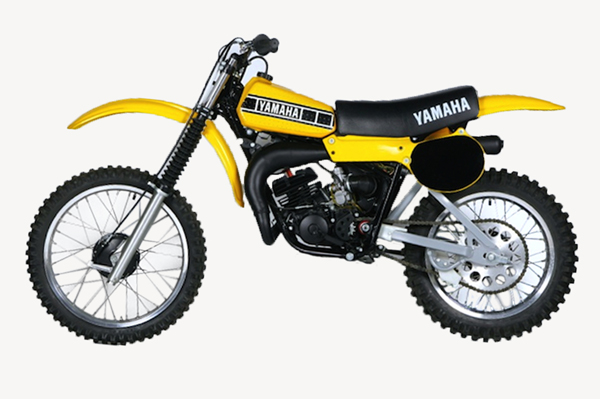
1977: Big new expect for the YZ. Information technology got a plastic tank, a radial fin head and an start front beam. Still, Suzuki was the biggest contest. Yamaha would dabble with the cycle for the next few years without making much progress, assuasive Honda to go back in the race.
1980: Without any real explanation, Yamaha decided to reverse the motor, moving the output shaft to the correct-paw side. Otherwise, it seemed like the same motor and the aforementioned chassis. Simply in a mirror.
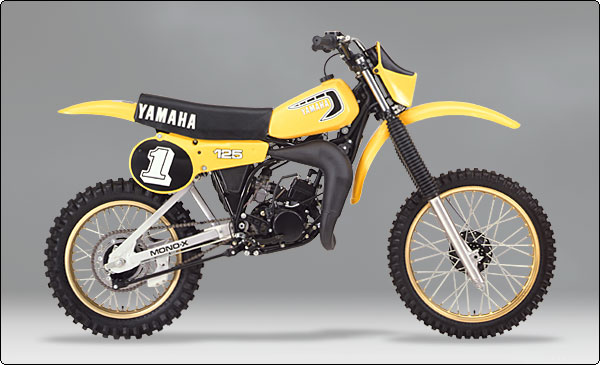
1981: Almost five years later temping the earth with a glimpse of Bob Hannah's factory OW27, Yamaha finally came out with the goods on a production cycle. The 1981 was liquid-cooled and well-nigh all new. The radiator was mounted on the fork, only like Hannah's had been, and at that place was a crazy front number plate that had a giant oral fissure for airflow. Unfortunately, the first liquid-cooled YZ was a flop. Information technology was blown out of the water by the 1981 Suzuki RM125, which was also liquid-cooled, and featured the total-Floater rear break with rising-charge per unit linkage.
1982: Yamaha responded to the full Floater by grafting a suspension link between the shock and swingarm, but retaining a nearly horizontal shock orientation. This supplied a riding rate, but looked similar (and was) a clumsy afterthought. The well-nigh significant characteristic of 1982 was YPVS, the offset power valve.
1983: This was a much better bike. Yamaha finally got the radiator off the steering crown where it adversely affected handling. The shock linkage was moved downwardly, eliminating the crude pin to a higher place the swingarm bolt. Finally, Yamaha was able to take on Suzuki. But now information technology was Honda'southward plow, and the new CR125 would be formidable through the rest of the '80s.

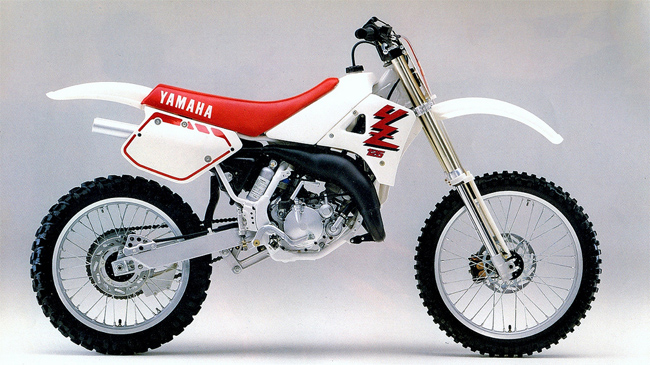
1985: Xanthous Yamahas officially became a affair of the past. Now that the U.S. got the white and blood-red colour scheme that had been mutual in other markets, there would no longer be whatsoever confusion between YZs and RMs. The '85 model got a number of interesting features, including the B.A.S.Due south. valve, which continued the rear shock valving to the rear brake. Creative, aye. Effective, no.
1986: An all-new motor came. The countershaft sprocket was moved back to the left side, which made more room for the shifter and less complexity for the kickstarter. The bad news was that the motor wasn't very fast. The shock location was also changed to a more conventional vertical orientation with Honda-similar linkage.
1988: Yamaha finally establish some power. The 1988 YZ was reasonably fast. It handled bang-up. The YZ125 was slowly turning into the cycle nosotros have today.
1989: New styling came, which was good. The new upside-down fork wasn't received so well. Honda also went upside down in '89, and Yamaha clearly did a better chore. Kawasaki and Suzuki would follow later. In the horsepower section, Yamaha was beginning to fall behind over again.
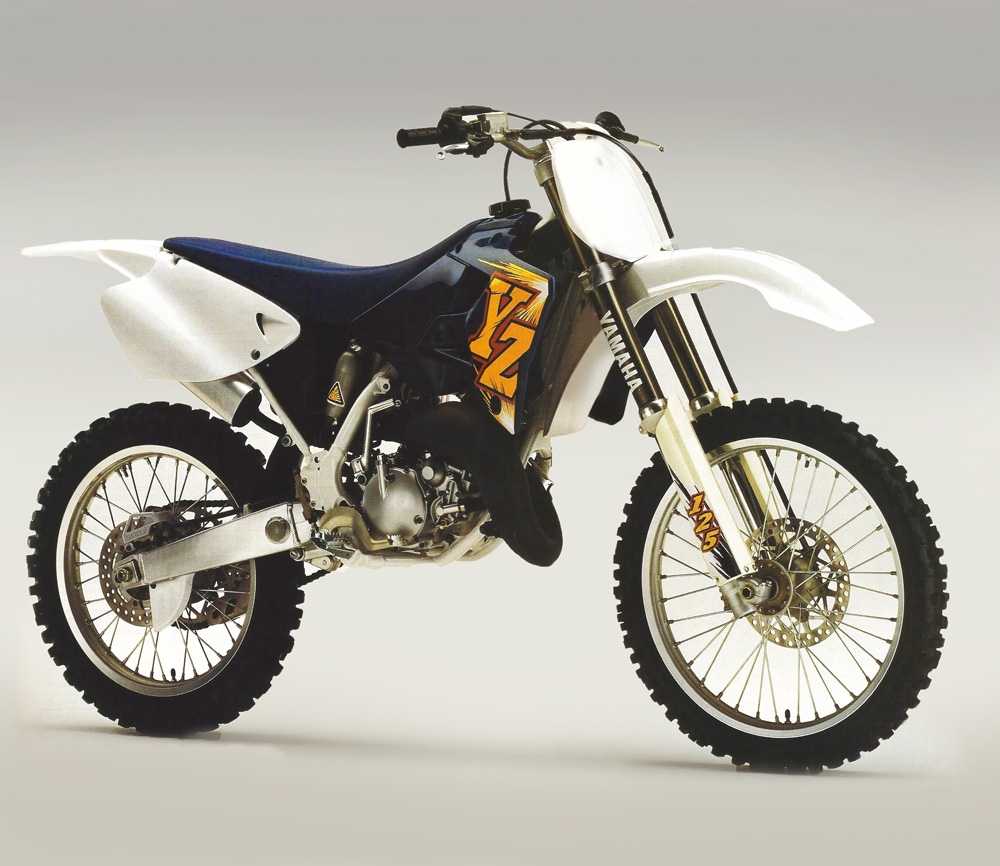
1996: Someone set off a fire alarm at Yamaha and everything inverse. Until this point, the YZ125 had never been fast. Some years were ameliorate than others, but the cycle was never a powerhouse. In 1996, that began to change. It still wasn't the fastest, but information technology was close. It got a new night blue colour and a new look. And the best was yet to come. With simply a few improvements in 1997, the YZ125 would win the Dirt Bike 125 shootout for the first time ever. In the years since then, information technology has never relinquished the top spot.
2002: This was a year of both expert and bad for the Yamaha 125. Good because information technology got a new chassis and slimmer bodywork. Bad because information technology got a 5-speed gearbox that didn't match the powerband. It still was the best 125, but information technology was shut. The KTM 125 was showing signs of communicable upwards.

2005: Yamaha went aluminum with all its YZs in '05. By now, Yamaha had returned to the vi-speed and anybody loved the bike, despite the fact that it wasn't quite as fast as KTM's 125SX. It nonetheless had far superior intermission, handling and reliability.
2008: Yamaha was suddenly alone. Honda, Suzuki and Kawasaki had all given upwards the 125 hunt, choosing to concentrate on 4-strokes—a market shift that Yamaha had started. From this indicate on, the just other 125s were European; bikes similar KTM, Husky, TM and Gas Gas. The YZ125 continued to improve. The fork improved dramatically, and today, the YZ'southward suspension remains its strongest asset.
2015: Yamaha requite the bike new body work and new break. The fork, in particular, was upgraded to substantially the same one that came on the YZ250F four-stroke, merely with unlike valving and a smaller axle.

THE USED Market
Used YZ125s are the all-time value in the dirt wheel world. Any 2005 and later version will command a higher cost because of the aluminum frame. Just yet, it's common to find prissy examples for less than $1700. That'south incredible, considering the price of big four-strokes.
Going equally far back as 1996 is safe, as you lot'll get a great cycle with a six-speed. The 2002, 2003 and 2004 models have a much lighter, improve-handling chassis, merely are saddled with the five-speed. Stay abroad from any YZ125 that isn't blue. In the early on '90s, they were real dogs, and by at present they've become quondam dogs.
The greatest part almost used 125s is that they are cheap to repair. The most expensive office that you might demand to replace is the cylinder. That sells for $350 on the Internet. A rod is $40 and a piston is $50. By comparison, the MSRP on a Yamaha YZ450F head is over $700.
There's no arguing with the practicality of any 125. And information technology just so happens that the Yamaha YZ125 is the king of the 125s. And there's no end in sight.
To read the history of the Yamaha YZ250, click hither.
montejanohateardideft66.blogspot.com
Source: https://dirtbikemagazine.com/yz125-the-bike-they-cant-kill/
0 Response to "what did yamaha do to 1991 yz 125"
Post a Comment